



If you've spent any time in fitness spaces, you've heard both sides of the argument. Bulk first. No wait, cut first. Start with a recomp. Actually, none of that matters until you fix your sleep.
Here's the truth: both cutting and bulking work — but only when you pick the right one for where you're starting. Getting this wrong wastes months. Getting it right accelerates everything.
This guide breaks down exactly what each phase involves, the numbers behind them, and how to make the call for your specific situation right now.
- Bulking = eating in a calorie surplus (200–400 kcal) to build muscle
- Cutting = eating in a deficit (250–500 kcal) to lose fat while keeping muscle
- Above ~20% body fat (men) or ~30% (women)? Start cutting
- Lean but skinny with no base? Start bulking
- Protein stays high in both phases — 1.6–2.4 g/kg depending on goal
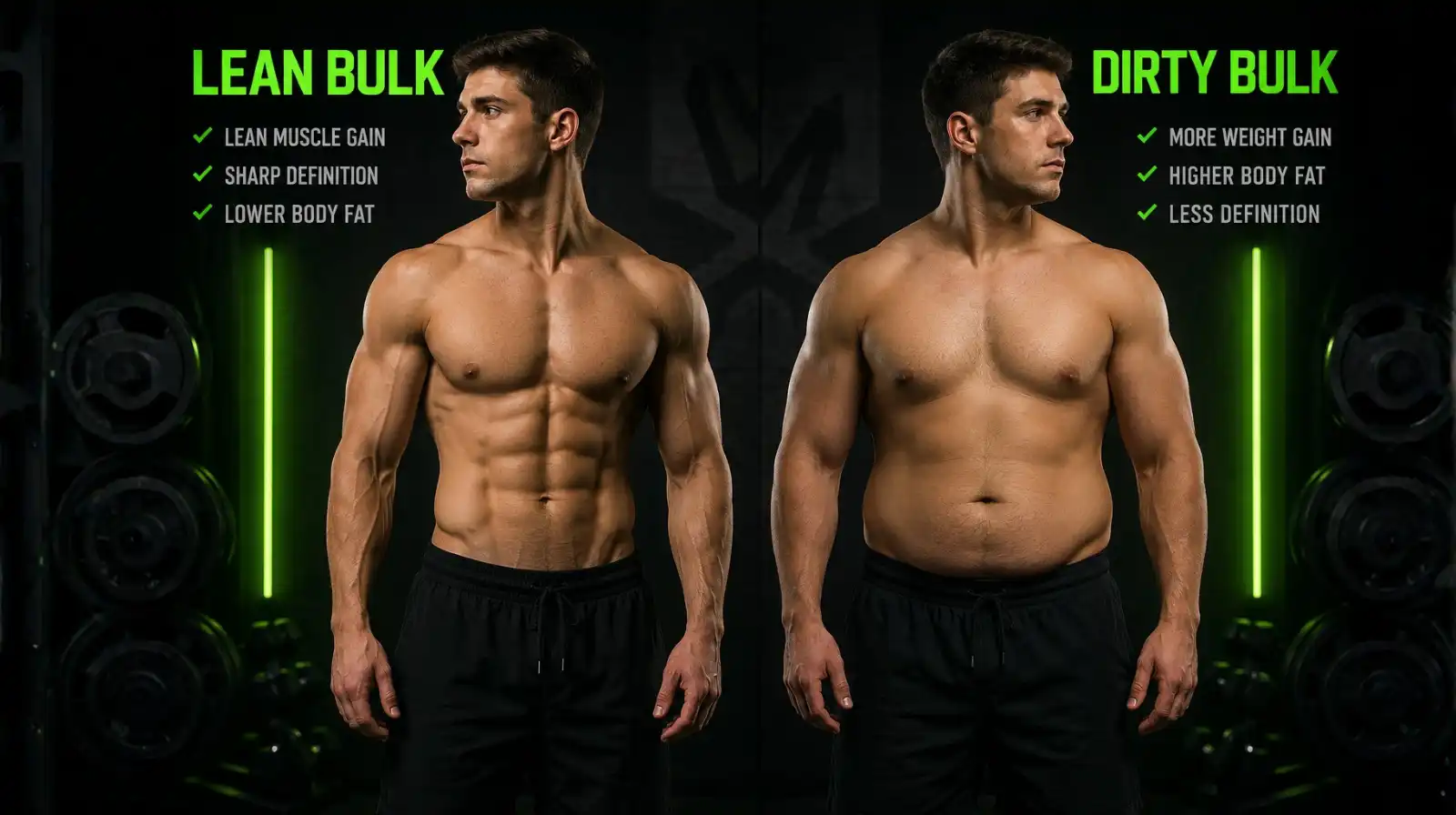
- A "dirty bulk" adds fat you'll spend months cutting — keep the surplus modest
What Is Bulking?
Bulking means eating in a calorie surplus — intentionally giving your body more energy than it burns. That extra fuel supports heavier lifts, faster recovery, and the synthesis of new muscle tissue.
Without a surplus, your body doesn't have the raw material to build significant muscle. You might maintain what you have, but growth stalls. That's why athletes cycle between building phases and leaning-out phases rather than trying to do both at once forever.
What to eat on a bulk
A clean bulk targets a modest surplus — not a license to eat everything in sight. The goal is to give your muscles what they need without piling on unnecessary fat.
- Calories: 200–400 above your TDEE (find yours with the TDEE calculator below)
- Protein: 1.6–2 g per kg of body weight — the anchor of muscle protein synthesis
- Carbs: High — carbohydrates fuel your training sessions and replenish muscle glycogen
- Fats: Moderate — essential for hormone production and nutrient absorption
Training focus during a bulk: compound movements — squats, deadlifts, bench press, rows, overhead press. Progressive overload is non-negotiable. If you're not pushing for new personal bests, the surplus isn't doing its job.
What Is Cutting?
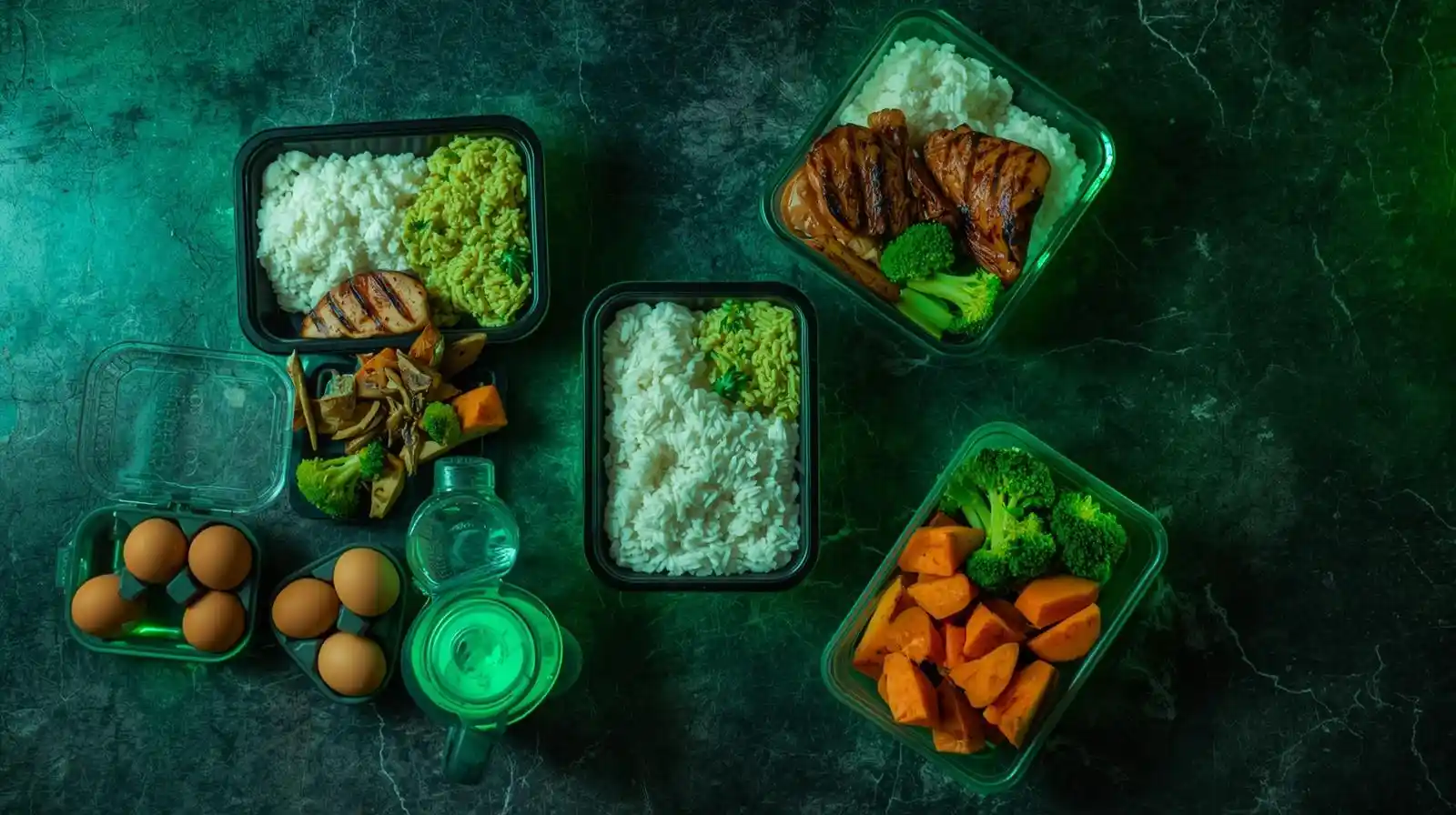
Cutting means eating in a calorie deficit — consuming fewer calories than your body burns — so it turns to stored fat for energy. Done correctly, you shed fat while holding on to as much muscle as possible.
The operative phrase is "done correctly." Aggressive cuts that crash your calories cause muscle loss, hormonal disruption, and metabolic adaptation that makes the next cut even harder. A controlled, moderate deficit is almost always the better strategy.
What to eat on a cut
Notice that protein is higher during a cut than a bulk. That's intentional — with fewer calories coming in, your body is more likely to break down muscle for fuel. High protein intake is your defence against that.
- Calories: 250–500 below your TDEE
- Protein: 2–2.4 g per kg of body weight (muscle protection priority)
- Carbs: Reduced but not eliminated — keep enough to fuel training sessions
- Fats: Moderate — don't go below ~0.7 g/kg or hormone production suffers

Cut or Bulk First — How to Decide
This is the question that causes the most overthinking. The answer is more straightforward than most people expect — it comes down to where you're starting, not some perfect optimization formula.
- Body fat is above ~20% (men) or ~30% (women)
- You want visible results before building
- You feel sluggish or self-conscious at your current size
- Insulin sensitivity is poor (belly fat, energy crashes)
- You're lean but have no real muscle base
- You've never trained seriously before
- Body fat is already in a healthy range
- Strength is the priority and muscle is the goal
If you're somewhere in the middle — average body composition, some muscle, some fat — you have two options: pick either phase and commit for at least 8 weeks, or try a body recomposition approach by eating at maintenance and gradually shifting your composition. It's slower, but it works well for beginners and intermediates who aren't in a rush.
Read more: Body Recomposition — How to Lose Fat and Build Muscle at the Same Time →
The Dirty Bulk Trap
Some people interpret "bulking" as permission to eat everything in sight — pizza, ice cream, fast food, surplus on surplus. That's a dirty bulk. And while you will build some muscle, you'll also build a substantial layer of fat that takes months to cut off.
A lean bulk with a modest, controlled surplus is almost always the better play. You spend far less time cutting afterward, you stay closer to a physique you're comfortable with year-round, and your performance stays sharp because you're not carrying unnecessary weight.
How Long Should Each Phase Last?
One of the most common mistakes is constantly switching phases. Two weeks of bulking followed by two weeks of cutting followed by "maybe I'll recomp" produces almost no meaningful result. Your body doesn't have time to adapt to either direction.
| Phase | Minimum | Recommended | Notes |
|---|---|---|---|
| Bulk | 8 weeks | 3–6 months ✓ Ideal | Muscle takes time — rushing it wastes the phase |
| Cut | 6 weeks | 8–16 weeks | Depends on how much fat you're losing |
| Mini-cut | 4 weeks | 4–6 weeks | Between bulks to stay lean; keep deficit modest |
| Maintenance | 2–4 weeks | Between phases | Hormonal reset; improves next phase performance |
Tracking Your Progress
The best plan without feedback is just a guess. Here's what to track during each phase:
The Bottom Line
Cutting and bulking aren't magic systems — they're just controlled ways of eating more or less than you burn. The "best" phase is whatever matches your current body composition and your honest short-term goal.
If you're carrying excess body fat, a well-executed cut reveals the physique underneath. If you're lean but thin, a structured bulk builds the foundation. Both require consistency over months, not weeks.
Pick one. Calculate your calorie target. Hit your protein. Train hard. Track the data. Then adjust after 3–4 weeks based on what the numbers actually show — not how you feel on a bad Tuesday.
Cut: TDEE − 250–500 kcal · Protein 2–2.4 g/kg · Moderate carbs · Keep lifting heavy · 8–16 weeks
Between phases: 2–4 weeks at maintenance calories
This article is based on peer-reviewed research and established sports nutrition science. Sources listed for transparency and verification.
- Slater G, Phillips SM. (2011). Nutrition guidelines for strength sports: sprinting, weightlifting, throwing events, and bodybuilding. Journal of Sports Sciences, 29(S1), S67–S77. pubmed.ncbi.nlm.nih.gov
- Barakat C, Pearson J, Escalante G, et al. (2020). Body recomposition: can trained individuals build muscle and lose fat at the same time? Strength and Conditioning Journal, 42(5), 7–21. journals.lww.com
- Helms ER, Aragon AA, Fitschen PJ. (2014). Evidence-based recommendations for natural bodybuilding contest preparation: nutrition and supplementation. Journal of the International Society of Sports Nutrition, 11, 20. pubmed.ncbi.nlm.nih.gov
- Morton RW, Murphy KT, McKellar SR, et al. (2018). A systematic review, meta-analysis and meta-regression of the effect of protein supplementation on resistance training-induced gains in muscle mass and strength. British Journal of Sports Medicine, 52(6), 376–384. pubmed.ncbi.nlm.nih.gov
- Trexler ET, Smith-Ryan AE, Norton LE. (2014). Metabolic adaptation to weight loss: implications for the athlete. Journal of the International Society of Sports Nutrition, 11(1), 7. pubmed.ncbi.nlm.nih.gov
- Heymsfield SB, Thomas D, Nguyen AM, et al. (2011). Voluntary weight loss: systematic review of early phase body composition changes. Obesity Reviews, 12(5), e348–e361. pubmed.ncbi.nlm.nih.gov
Younes is the founder and content creator behind SpotyFlex — a fitness blog built on the principle that real training knowledge shouldn't be buried under bro-science and filler. He covers nutrition, body composition, and strength training with a focus on what the research actually supports. When he's not writing or building the platform, he's in the gym applying it.

/1.webp)
